14.
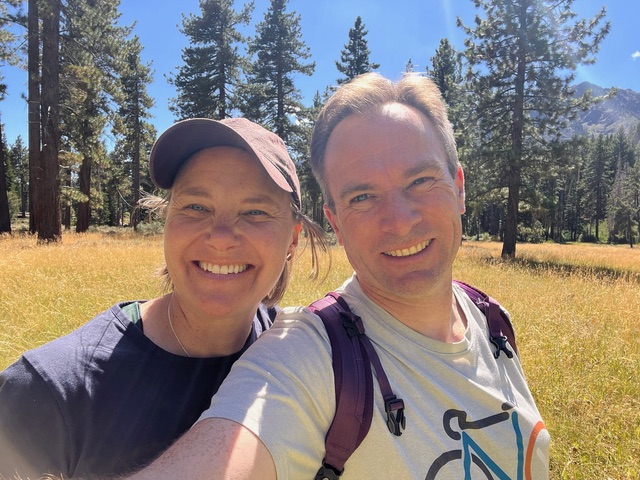
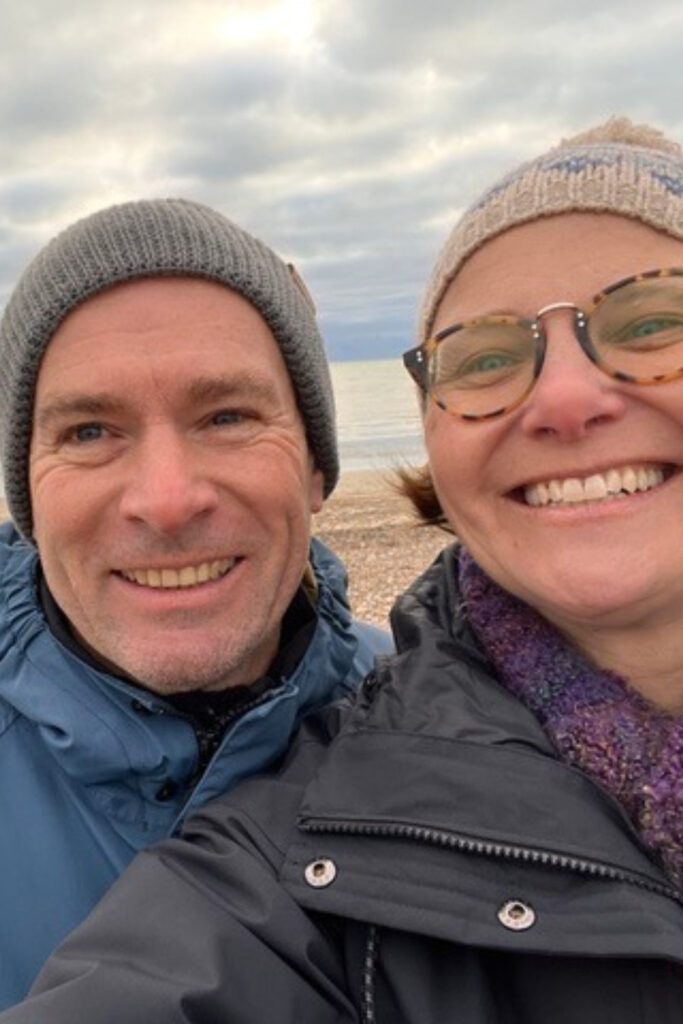
Stephanie & Stuart Mills
Co-Founders, Practical Acts
A couple mobilises the spectrum of their wealth to support the environment
Tell me about the different aspects of your environmental work.
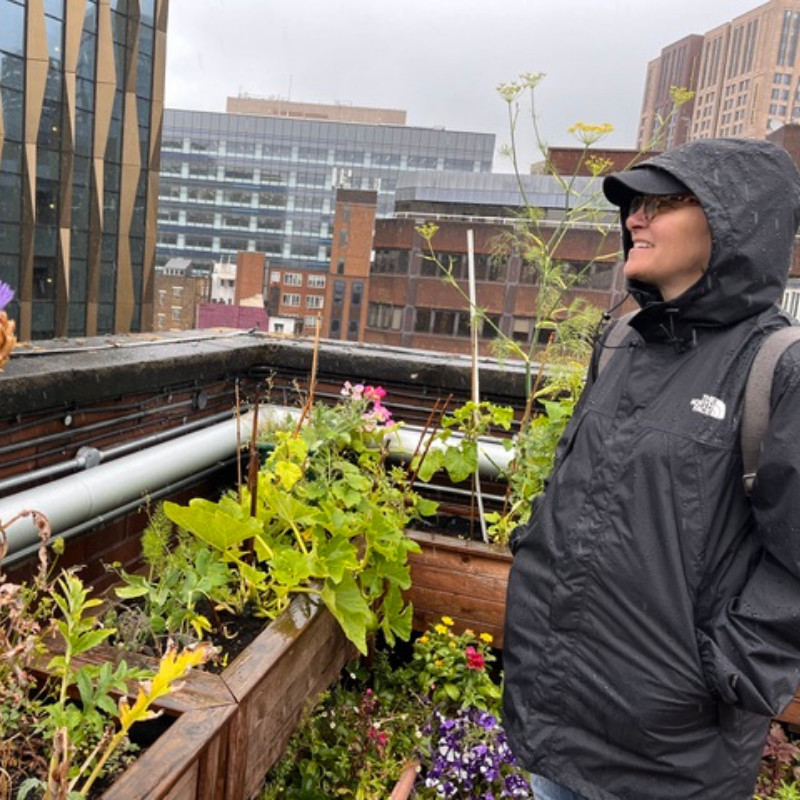
Stephanie: We have two themes we focus on: Grey to Green (urban greening projects) and community energy. We find that those are broad enough to cover lots of different areas, yet give us enough parameters to draw some boundaries.
Stuart: Both of them have an element of community in them; it’s not just the environment but the people, too. We also look to be in spaces where there is a multiplier effect, with different funders involved and some momentum.
Are these criteria that you apply to your grantmaking, your investments or both?
Stuart: For our community energy work, the majority is through impact investment, whereas the Grey to Green work is mainly grants. But we try to look across all our ways of using capital, particularly financial capital. Because we’re relatively small funders, we’ve realised we can have more impact when we take into account all we have to bring.
Stephanie: When we started, we went to CAF (the Charities Aid Foundation), and looked at donor-advised funds, but their minimum amount was £20,000. We realised that was an amount that we could donate, but it was a bit of a stretch for us to put that amount toward philanthropy and lock it away. Thinking about it more flexibly opened up this whole spectrum of what our capital is doing. It also encouraged us to learn more about the role of philanthropy: when it can be catalytic and strategic in solving greater problems.
We try to look across all our ways of
using capital, particularly financial
capital. Because we’re relatively
small funders, we’ve realised we can
have more impact when we take into
account all we have to bring.”
Tell me more about what you see as the role of philanthropy versus investments
Stephanie: Speed. Philanthropy can be unlocked very quickly.
Stuart: Ideally philanthropy would be focused on something that cannot currently be solved by a business model with a financial return. There are examples of philanthropic money going towards things that actually should be businesses today, whereas there are plenty of issues that could never be solved by businesses.
We’re not hugely sophisticated about applying these things we’re saying, but we’re getting better at it – the more active you get, the more the actions start to teach you.
Philanthropic funding is for resolving systemic issues where a financial return makes no sense.”
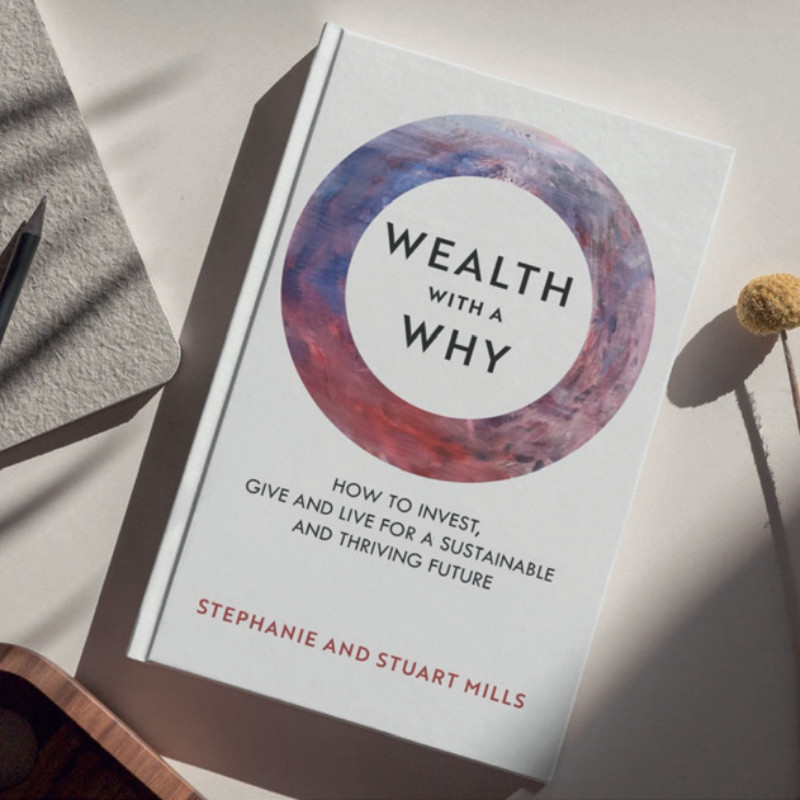
Let’s talk about Wealth with a Why, your recent publication. What motivated you to write it and who are you trying to influence with it?
Stuart: We’ve written down our whole approach in the book because we want to encourage others to think about how they can deploy all their capital. We describe a spectrum, with traditional wealth management on one side: that’s pensions, your ISAs, your traditional assets, where you may have a traditional financial advisor or wealth manager helping you. Then on the other side of the spectrum is philanthropic giving: here’s a cause, here’s some money you can give to it. There are other ways to support philanthropic causes, too, like low- or no-interest loans. And then in the middle there is this broad bucket of impact investments, which fills the gap between these two arenas.
Philanthropic funding is for resolving systemic issues where a financial return makes no sense. At the other end of the spectrum is the money I need to live my life – my pension and so on. But I can invest that for positive impact. For example, my pension could be invested in wind energy, not in fossil fuels.
So the book is a way of opening up people’s eyes to their entire financial wealth and to think about the impact of all of it.
We are trying to make sure that there is a better world for our children through the impact of our capital, with a deep belief that we can make interventions.”
The book is probably part of this, but what legacy do you hope to leave behind?
Stephanie: One thing we are doing is testing different ways, different financial vehicles, in which our money can have an impact. The amounts that we’ve put forward are really quite small, but we’ve been able to see how things work.
Stuart: We use this phrase: ‘A better world is possible, and it starts with daring to imagine it.’ We are trying to make sure that there is a better world for our children through the impact of our capital, with a deep belief that we can make interventions. The world changes in complex ways. How can you connect more dots than were connected before? We are a little piece of this puzzle, especially if we can work out ways that this becomes far more than just our bit of money and our bit of time.
Stephanie: For me, it’s very much about what I get from it. I’ve really enjoyed learning different things. It’s also that phrase, ‘action absorbs anxiety’. I’m involved, I can do something, I have things to contribute, I’m connecting with people. I’ve found that it takes away some of the scariness of climate change and feeling so helpless.
My first goal with the book was to provide a way in which people can know what’s available to them. But I can’t talk about financial vehicles without talking about my values, and what this work has brought to me personally – what I’ve learned about generosity, the power of collective action, of working with others – that whole process, which is much more meaningful, exciting and fun to talk about than the dryness of financial vehicles.
It’s also that phrase, ‘action absorbs anxiety’. I’m involved, I can do something, I have things to contribute, I’m connecting with people. I’ve found that it takes away some of the scariness of climate change and feeling so helpless.”
Do you do a lot of collaboration with other donors or investors?
Stephanie: One of our first ventures was with Groundwork London. They were looking for sponsorship from Stuart’s company, and we said we might be able to help as individuals. We found they just needed a little bit of funding to unlock a lot – to keep other funders interested and bring them on board. That ended up being a three-year commitment in which we really were able to work with them as they brought the other funders on board. That was a fantastic collaboration, and it just showed how that multiplier effect could help.
Stuart: Then we joined EFN, gave a grant to support the Environmental Impact Investing Group, and participated in that, which also connected us with things like Green Angel Ventures. Working with others in networks and groups like that is more fun, more engaging. We’ve met some pretty incredible people that we would never have spoken to otherwise, and we learn so much from them.
We’re also aware that you need to be able to recognise echo chambers and opportunities for expansion. We need a lot more people in these conversations; that in itself is part of the work, and part of the reason that Wealth with a Why is available on wider book platforms; because we want to reach a different set of people.

I’m a big believer in unrestricted funds. For me it’s a kind of hubris to have a tiny little picture of what they do, and to think that I have the answer as to how they should use my money. I trust that they know how to use the money best.”
We talk about using all our capitals: we are worth more than our money. There’s time; there’s talent or skills; there’s testimony; there’s ties – networking and joining dots; there’s trust; and then treasure, or the money we can invest well or give away.”
What would you say characterises your contributions beyond money?
Stuart: We talk about using all our capitals: we are worth more than our money. There’s time, there’s talent or skills, there’s testimony – this interview is an example of that, providing the gift of testimony in the hopes that it triggers something else. Then there’s ties – networking and joining dots – and then treasure, or the money we can invest well or give away. It’s all of those things, centred on our values – or at least, we’re trying to become more and more consistent across our values.
And then there’s also the gift of trust. Sometimes others ask how you can know that a charity is going to do what they say they’re going to do. And I ask, ‘How do you know that the company that your pension is invested in is going to do what it says it’s going to do?’ If you’re going to give to a charity, you need to trust the organisation.
Stephanie: I’m a big believer in unrestricted funds, which is about that trust element. Organisations are generally strapped for everything: time, money, resources of all kinds. For me it’s a kind of hubris to have a tiny little picture of what they do, and to think that I have the answer as to how they should use my money. I trust that they know how to use the money best. It’s also about recognising that there are core costs to running any charity: you can’t run a programme without covering your core costs.
What do you wish more wealth holders understood about environmental giving and investing?
Stuart: From my perspective, it’s that there are very few bad investments when it comes to environmental issues. It’s partly because of where we’re at – the extent of the problem – but it’s also just because of the number of amazing people working in the space. From an investments perspective, it’s a bit like shooting fish in a barrel. Your money will have an impact, it’s just a question of degree.
I just wish that more people trusted that it was worth it, that the world can be a better place. The solutions are there. We’re not talking about revolutionary technologies in most cases, or community engagement that hasn’t been done before. Trust that the solutions are there, and get on with it.
Stephanie: Along those lines, don’t wait. Just get started.
Stuart: The sense of urgency to do something is absolutely inherent in how we think. We believe the science, and that tells us that unless we do things now, the world is not going to be a better place. A better world means human beings are thriving, as well as the planet and biodiversity. It isn’t about sacrifice. It’s about investing in making things better for all.
Part of what we’re encouraging people to do is walk through doors that might feel only slightly open. Because on the other side of that door are the most amazingly welcoming people of all kinds. Some of the people that Steph met at her first EFN Retreat – wow. They were just so welcoming. You walk through the door, and people start to engage. People have got such wonderful intentions in the environmental field that it’s a joy to be part of it.
One last question. If nature were speaking through you, what would she be saying? What would her message be to other wealth holders?
Stephanie: I was going to say thank you, but I’m not sure that we’re at thank you just yet!
I went to see the More Than Human exhibit at the Design Museum recently. One of the pieces was a collection of baskets made by an Indigenous group [the Association of Women Weavers of Caura Adooni]. They have been making these baskets for hundreds of years, and it’s very much in the tradition that every piece of fabric that creates these baskets has been given to the basket weaver by the forest after a series of rituals in which the weavers ask permission for them. They aren’t taking anything, they’re asking for permission, and then the trees and the forest create these baskets together.
I think if nature had a message for wealth holders, it would be: You are welcome here, but please ask for permission before you take from me.
Interviews
Nick Oldridge
Individual Donor
A donor sees the need for a different type of climate communications
Sonal Sachdev Patel
CEO, GMSP Foundation
A family supporting the grassroots.
Ben Goldsmith
Chair, Conservation Collective; Trustee, Children’s Investment Fund Foundation
A lifetime championing nature
Eli Manderson Evans
CEO, Blagrave Trust
A youth funder recognises the urgent need to address climate change
Leonie Taylor
Trustee, Taylor Family Foundation, and individual donor
A donor faces the origins of her wealth
Sufina Ahmad
Director, John Ellerman Foundation
A foundation shifts from funding individual issues to focus on systemic change
Lauren Gupta & Becky Holmes
Co-founders (with Bill Holmes), The Helvellyn Foundation
Next generation donors with a passion for wildlife and trust in their partners
Sophie & Nick Marple
Co-Founders, Gower Street
A couple deploys their wealth to tackle the climate crisis
Renata Minerbo
Co-Founder with Seth Tabatznik, Be the Earth Foundation
A family foundation supports the shift to an eco-centric economy
Julia Davies
Founder, We Have The POWER
A donor directs her wealth and legal expertise towards transformative change
Jon Cracknell
Trust Secretary, The Ecology Trust
A long-time funder shares his reflections on where the environment movement is succeeding and what funders could do differently
Christine Oliver
Trust Secretary, Polden-Puckham Charitable Foundation
A foundation spends down its funds to meet the challenge of this moment
William Kenyon
Individual donor
A donor realises that funding what he’s passionate about allows him to stick with it for the long-term
Stephanie & Stuart Mills
Co-Founders, Practical Acts
A couple mobilises the spectrum of their wealth to support the environment
Jessica Sweidan
Co-Founder, Synchronicity Earth
A foundation helps other donors protect life on earth