01.
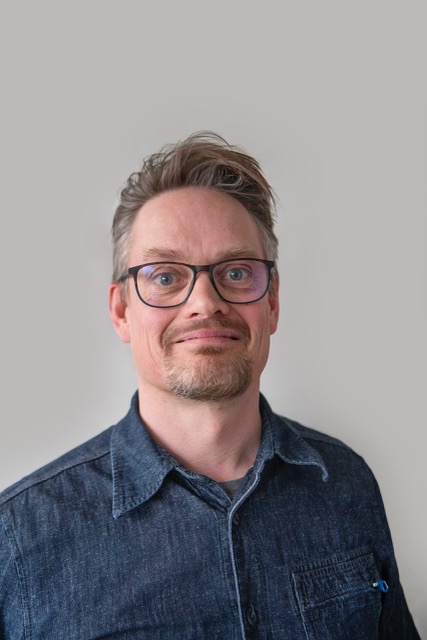
Nick Oldridge
Individual Donor
A donor sees the need for a different type of climate communications
You’ve got into funding and doing environmental work relatively recently. Can you tell me about what you’ve been doing?
My environmental work comes under two distinct projects: Climate Science Breakthrough and the National Emergency Briefing.
They have an underlying similarity. You and I live in an environmental bubble. We are all quite knowledgeable but all scaring each other. People outside the bubble are just getting on with life and worrying about many other things, quite rightly. But that setup in society is not enough to tip our policymakers and society as a whole into the kind of action we need.
We need more climate recruits, basically. Both of these projects are trying to find ways to help people who aren’t interested in reading environmental content to connect with the urgent evidence of the risks we face, the timescales we face, and all the amazing things we can do to tackle the problem.
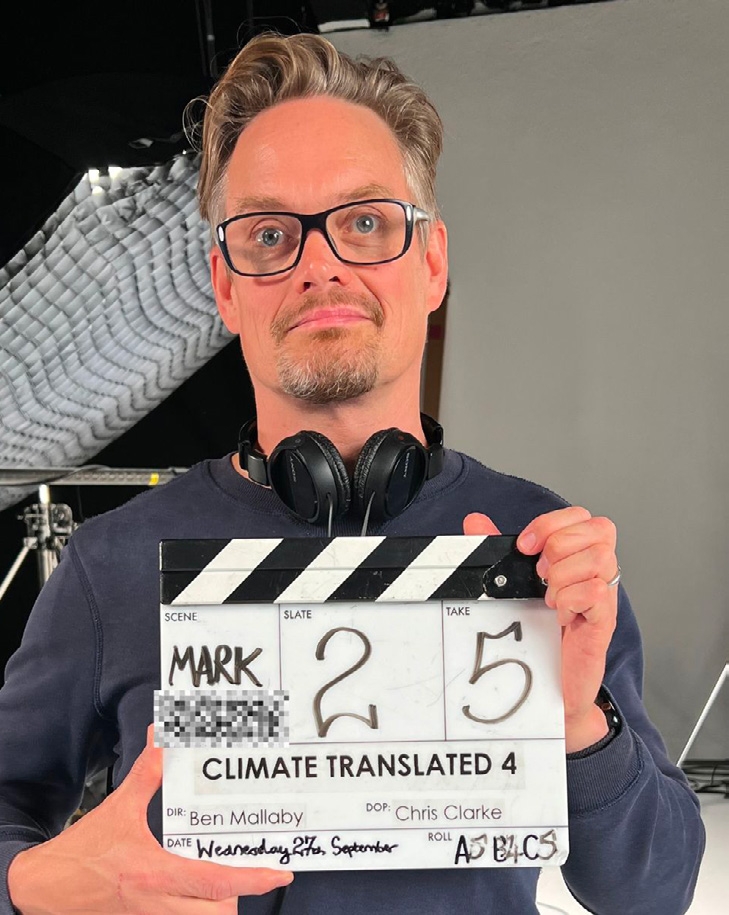
Climate Science Breakthrough does that by creative means: using comedy. We take a climate scientist who no one’s really listened to or heard of and we pair them with a famous comedian who makes jokes out of the scary stuff. There is loads of great research on this: comedy is a tried and tested way of getting us to digest information that we otherwise might not be interested in.
That was keeping me quite busy until my brother, who also works as a climate communicator, came up with this concept of a National Emergency Briefing. He wanted us to take climate science as seriously as we took science during COVID. One day he told me he’d hired Westminster Central Hall, so I downed tools and said, ‘You can’t possibly survive doing this on your own; let’s team up.’
The National Emergency Briefing is trying to do a national reset on information surrounding climate, to counteract all the dis- and misinformation that’s out there. It connects experts with policymakers and the public, so that we start to behave according to reality, and not according to the media’s version of reality.
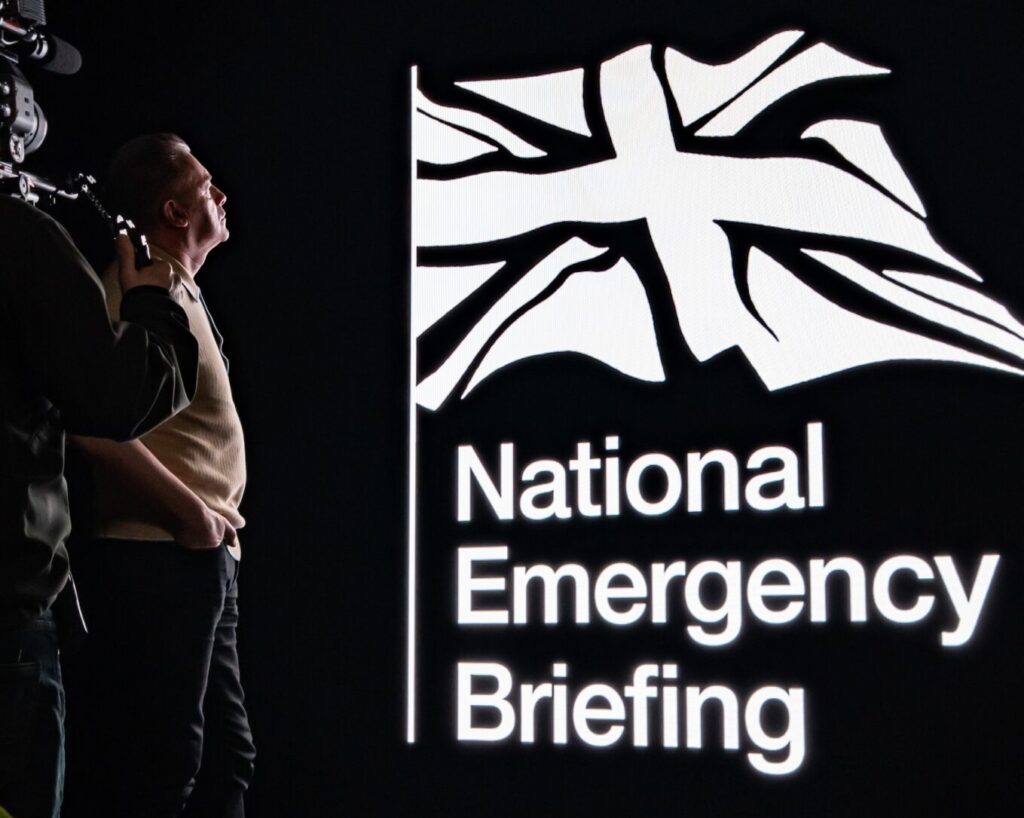
The National Emergency Briefing was inspired by COVID, when experts stood behind podiums and told us very serious things, and by a vast majority we listened and took it seriously.”

Tell me about your background. How did you get into climate communications?
I used to work in manufacturing, with my brother, in a family business making roof tiles. That’s quite an odd place to come from, but I suppose there are a few things that come from that experience which define why I ended up doing this.
The first is that it made me climate aware. We would burn about a million pounds’ worth of gas every year to fire ceramic clay tiles. We weren’t in the league of any of the multinationals, but we were an intensive energy user. Back in the early 2000s, there were conversations about carbon. The EU was looking at whether to restrict emissions, and the high-intensity energy use industry was saying, ‘Well, we’ll just move manufacturing overseas and import the product if that happens.’ That conversation injected climate into my brain probably earlier than for most people.
Then I read the Stern review1 and George Monbiot’s book Heat. I felt this pull to action – of not being allowed to continue being an observer – because at that point we had sold the business and I was financially comfortable. I guess when you stop worrying about your mortgage, you just start worrying about something else. I realised that the grown-ups hadn’t turned up and solved the problem, so I felt I had to act. And I’ve always worked in comms and marketing, PR, so I understood that communication and messaging are key.
Eventually that led me to connect people up with the climate science I was listening to, but no one else was.
Were there any other particular moments or experiences that made this feel more urgent for you?
I saw a video clip from Professor Kevin Anderson, the climate scientist. I was struck by it because my son was at uni at the time, and in the video it looks like he’s gone into a lecture theatre in a basement somewhere and recorded this on his phone. It had bad lighting, bad sound, but the words that Kevin was saying are kind of the most important words on the planet. That’s not hyperbole, he was just spelling out where we are versus where we should be. Yet, you’re watching it in the context of something that looks fringe, unimportant.
I just thought, this content should be on the BBC, on the news. He shouldn’t be in a basement saying this. So that was what tipped me. I realised I wanted to do a communications project with people like Kevin Anderson. I wanted to spend the money that I would have left for my children – some of it, anyway – and to find a way of putting him in a context that’s appropriate to some of the words that he was saying. That’s all I had to go on, and I just started reaching out to people from that point.
I tried to avoid the bubble in those conversations. I met two gentlemen who run the Utopia Bureau, former creative directors from the ad industry, and that’s exactly what I wanted – people who would apply the hard and fast rules of advertising to the climate message. I didn’t want climate people doing this work. I wanted it to be people who understood how to get us to buy things.
They became my co-founders, and brought in all the clever thinking about using comedians, and how to create content that would cut through. So in a way, I just came along with a problem and a little bit of money, and they turned that into a concept that took off.
Have you brought in any other sources of funding for the two projects beyond your own?
Both of those projects started without any other funding, and I don’t know whether they would have happened otherwise. It’s quite hard to get funding for things that aim to shift the culture because it’s really hard to measure. Our conversations with other UK funders amounted to nothing, and we ended up working with family foundations in the US who were interested in supporting Climate Science Breakthrough without making us jump through hoops. That’s how we ended up with the [US comedian] David Cross video. Those funders just said, ‘There’s nothing happening in the culture sector; we need this’, and we didn’t have to prove a whole load of things.
The National Emergency Briefing was the same: my brother initially funded it and when we joined forces, I added some funds. That made it, not easy, but uncomplicated to deliver, and at speed. But now, for Phase Two, rolling out the film, we’re running a crowdfunder.
Can you explain what the National Emergency Briefing was in more detail?
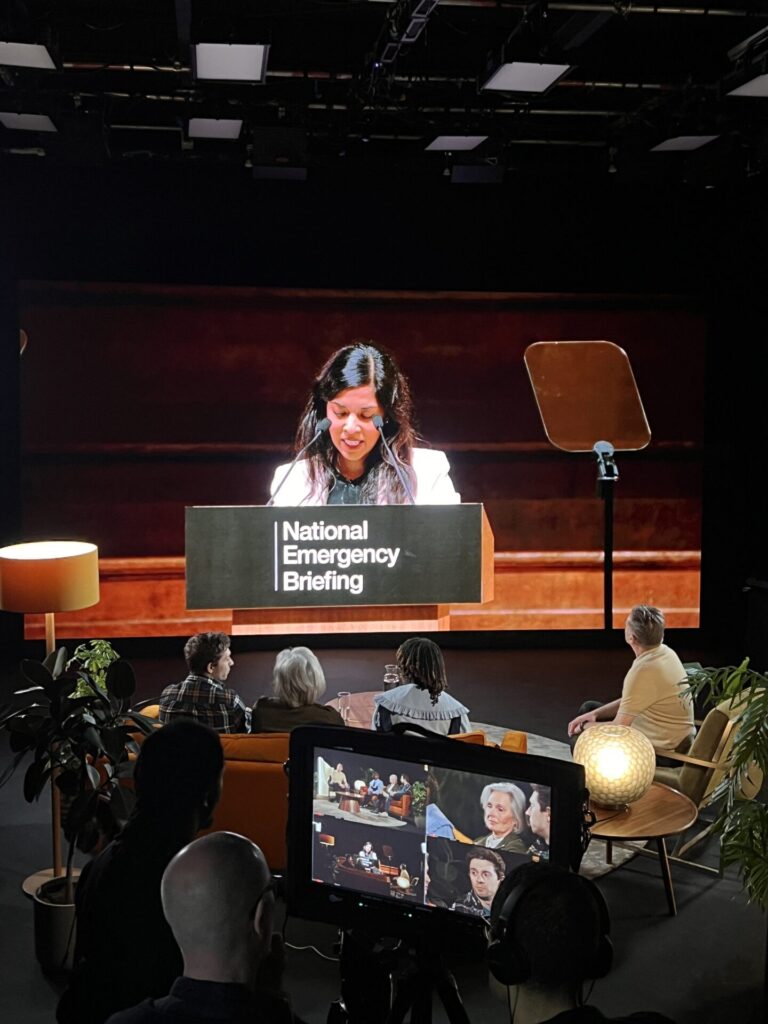
The National Emergency Briefing was inspired by COVID, when experts stood behind podiums and told us very serious things, and by a vast majority we listened and took it seriously.
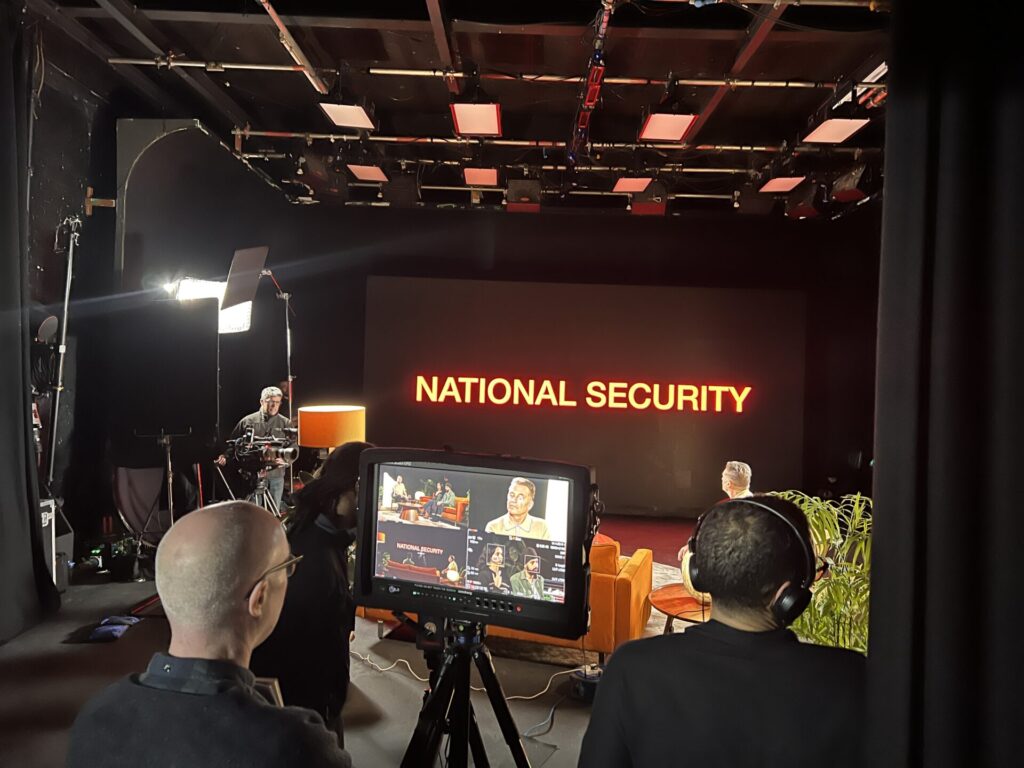
It’s different with the climate, isn’t it? Because it’s not here and now, like a pandemic. But that was the inspiration. We had nine experts delivering very concise, ten-minute briefings on everything from climate and nature to national security, food, health, the energy transition – all things that relate to our day-to-day living, with a real focus on the specific impacts here in the UK.
People are awash with end-of-the-world headlines, but they’re all very global, about faraway places, so we wanted to really zero in on the UK.
We prioritised the attendance of parliamentarians and had 100-plus in attendance. We also went out to wider society with representation from music, culture, business, finance, faith. The idea was for everyone to be in that room and witness the briefing from experts.
Behind each massive climate problem is more or less always a story of, ‘Yes, but if we did this, it would actually be amazing, it would be brilliant.’”
You and I live in an environmental bubble. We are all quite knowledgeable but all scaring each other.”
Comedy is a tried and tested way of getting us to digest information that we otherwise might not be interested in.”
Let’s talk about your influences. You’ve talked about joining up with the Utopia Bureau guys. Who else have you learnt from, or worked alongside that have changed the way you’ve done things?
I’ve had several influences in terms of climate communications, including Professor Kevin Anderson and Professor Katharine Hayhoe. In terms of the giving, that’s been a lonely old journey – conversations with Julia Davies and Nick Marple [both featured in this collection] have been helpful, in terms of getting someone else to walk you through the process of giving something away that you’ve been taught to nurture and not be irresponsible with.
But ultimately it was me that helped me. I had a mental exercise where I tried to have a conversation with myself in the future – 2030 or 2040. I really tried to visualise myself (which was quite hard to do; using your imagination is harder to do these days) and imagine how I would feel if I hadn’t used some of my time and money to do something. That was probably the thing that made me most resolute about getting on with it.
What do you feel have been your successes so far?
This is when the big vision comes down to cold, hard reality, isn’t it! We’re trying to contribute to a social tipping point. The research into Climate Science Breakthrough in both the US and the UK shows that it shifts people’s thinking, and it shifts the salience of climate change particularly – it moves it up the list of priorities that people are concerned about. In the UK, we got Jo Brand and Professor Mark Maslin on GMTV, where anyone coming on to talk about climate is normally ripped apart by Richard Madeley. But because there was a professor there, he couldn’t do that. That was a huge moment for us, because we took it out of the fringes and into the mainstream.
In the US, we got David Cross and Professor Michael Oppenheimer on CBS. The usually acerbic presenter was saying, ‘This is the best piece of climate communication I’ve seen, this really reached me.’
With the National Emergency Briefing, I think the measure of success now is the extraordinary number of organisations and institutions that are knocking on our door saying, ‘What can we do to help?’ We’ve had requests from the CEO of Kew Gardens, some of the unions, parts of the NHS, the National Trust, members of the clergy who all want to host screenings of the film of the briefing.
I had a mental exercise where I tried to have a conversation with myself in the future – 2030 or 2040. I really tried to visualise myself (which was quite hard to do; using your imagination is harder to do these days) and imagine how I would feel if I hadn’t used some of my time and money to do something.
From where do you derive your sense of hope or optimism to keep going?
We have so many solutions in each sector. If you look at food, climate impacts are super scary – we could run out of food. But the solutions are also super inspiring – if the UK shifted to plant-rich diets, we would free up an area of land the size of Scotland! That’s because to grow plants in order to feed animals for us to eat is massively inefficient. It uses up huge amounts of land.
If we decarbonise the planet, we save $12 trillion, just because of the knock-on effects. So behind each massive climate problem is more or less always a story of, ‘Yes, but if we did this, it would actually be amazing, it would be brilliant.’ If we didn’t have all those options at this stage, I don’t think I’d be doing this. It would be bunker time.
My sense of hope comes from the potential of unlocking all of this massive, positive change, which we more or less know how to do.
There’s a bit of outrage in there as well. I’m programmed to be outraged when people abuse power, I think I got it from my mother. Outrage is an important ingredient. The climate communications researcher Genevieve Guenther talks about this. If you just scare people, they obviously retreat because they don’t know what to do. But if you add outrage to fear, people act. Outrage is a great source of energy.
What do you wish more wealth holders understood about environmental giving?
If you’re already funding philanthropically, but you’re not funding the big picture climate stuff – all the other things you’re funding are going to become worthless. If you’re not working to prevent us from reaching tipping points on the world warming up, and the collapse of the biosphere, then all the work you’re focused on won’t be doable when we hit societal breakdown, when markets collapse, etc.
All you have to do is read what the actuaries are saying about what’s going to happen to global GDP – a 20 percent drop by 2050, and then a 50 percent drop in global GDP from 2070 onwards. Anyone who’s hoarding money is going to lose it.
Those with money now are in a unique, time-limited position to prevent climate breakdown and all the devastation that entails.
If nature was speaking through you, what do you think she’d be saying?
One mistake I made was not to start doing this sooner. I think I held back for too long because of that classic sense of, ‘Who the hell am I to have an opinion on this, or even do something?’
So I think nature would be saying, ‘Don’t let this end in regret.’ That goes back to my exercise of taking yourself forward into the future. It’s really hard to realise how important something is till you’ve lost it.
Interviews
Nick Oldridge
Individual Donor
A donor sees the need for a different type of climate communications
Sonal Sachdev Patel
CEO, GMSP Foundation
A family supporting the grassroots.
Ben Goldsmith
Chair, Conservation Collective; Trustee, Children’s Investment Fund Foundation
A lifetime championing nature
Eli Manderson Evans
CEO, Blagrave Trust
A youth funder recognises the urgent need to address climate change
Leonie Taylor
Trustee, Taylor Family Foundation, and individual donor
A donor faces the origins of her wealth
Sufina Ahmad
Director, John Ellerman Foundation
A foundation shifts from funding individual issues to focus on systemic change
Lauren Gupta & Becky Holmes
Co-founders (with Bill Holmes), The Helvellyn Foundation
Next generation donors with a passion for wildlife and trust in their partners
Sophie & Nick Marple
Co-Founders, Gower Street
A couple deploys their wealth to tackle the climate crisis
Renata Minerbo
Co-Founder with Seth Tabatznik, Be the Earth Foundation
A family foundation supports the shift to an eco-centric economy
Julia Davies
Founder, We Have The POWER
A donor directs her wealth and legal expertise towards transformative change
Jon Cracknell
Trust Secretary, The Ecology Trust
A long-time funder shares his reflections on where the environment movement is succeeding and what funders could do differently
Christine Oliver
Trust Secretary, Polden-Puckham Charitable Foundation
A foundation spends down its funds to meet the challenge of this moment
William Kenyon
Individual donor
A donor realises that funding what he’s passionate about allows him to stick with it for the long-term
Stephanie & Stuart Mills
Co-Founders, Practical Acts
A couple mobilises the spectrum of their wealth to support the environment
Jessica Sweidan
Co-Founder, Synchronicity Earth
A foundation helps other donors protect life on earth
- The UK Chancellor asked Sir Nick Stern to lead a major review on the economics of climate change to understand more comprehensively the nature of the economic challenges and how they can be met, in the UK and globally. The final Stern Review on the Economics of Climate Change was published 30 October 2006. You can read via The National Archives. ↩︎