

In November 2025, we set ourselves a number of new individual and organisational objectives related to justice, equity, diversity and inclusion (JEDI). One of these is to ‘increase recognition and support of neurodivergent people in the environment sector’. Six months on, I thought it would be good to reflect on what we have tried, what we have learnt, and what we would like to try next.
Sharing responsibility
We set this objective as an organisation-wide one, not solely under the remit of one person. This ensures responsibility is shared, but can risk nothing being done. It is also easy for those most impacted by a topic to end up putting the most effort in (case in point – I am currently the only staff member who has disclosed that they are neurodivergent, having been diagnosed as autistic and with ADHD last year, or AuDHD as this combination is informally known). This isn’t necessarily a bad thing – it is often easier to understand what needs to change when you can empathise most closely with those it needs to change for – but it is important that others lead or support where they can. To help sustain momentum, and ensure our JEDI work is implemented across all areas, we have set up a JEDI working group within our staff team. We meet quarterly to assess progress and identify further opportunities for improvement.
Learning
As with all JEDI-related topics, there is always more to learn. At EFN, we try to support individual learning journeys – sharing reading material and listening to what each person is discovering – while also coming together to explore topics as a team. Last year, we were fortunate enough to receive group training on neurodivergence and its intersection with the environment from Emma de Saram (you can read more in her blog: Why more support for neurodivergent people working in climate is needed – and how funders and eNGOs can help). She has delivered versions of this workshop to several other organisations and I would strongly recommend it. We would like to continue our group learning in this area and welcome recommendations of courses and facilitators.
Supporting our staff
We are a fully remote team but there are still many ways of supporting neurodivergent staff members. If you have met one neurodivergent person… you have met one neurodivergent person. As such, there is no instruction manual for how to make their life easier, so the best place to start is by asking.
Many neurodivergent people, especially those diagnosed later in life, might not yet know what they need. (Neurodivergence is frequently missed, particularly in women and girls, and autistic women are often misdiagnosed with conditions such as anxiety.) This process can therefore be approached as one of gentle, collaborative exploration. For me, creating a space where someone feels comfortable to advocate for themselves is one of the most powerful things an employer can do. Part of this is simply ensuring understanding, empathy and respect and building a culture of support and kindness across the team.
That said, there are a few particular things which tend to be beneficial for many neurodivergent people, particularly autistic people and those with ADHD (two of the most widely recognised forms of neurodivergence). Flexible working hours and a supportive approach to sick leave can make a real difference (neurodivergent people, women in particular, can be more likely to experience co-occurring health conditions). Being clear, and inviting clarifying questions, is also very helpful. Many of us miss subtle hints, so if something is important (or not), or if you think our work is good (or not), it helps to say so directly. I have also asked for, and received, a paid AI plan (one of my best life-hacks is asking for ‘ADHD-friendly’ summaries of reports), noise-cancelling headphones, and the flexibility to avoid rush hour when travelling to events in London. As an organisation, we are exploring joining the Sunflower Scheme and purchasing a team subscription to Calm.
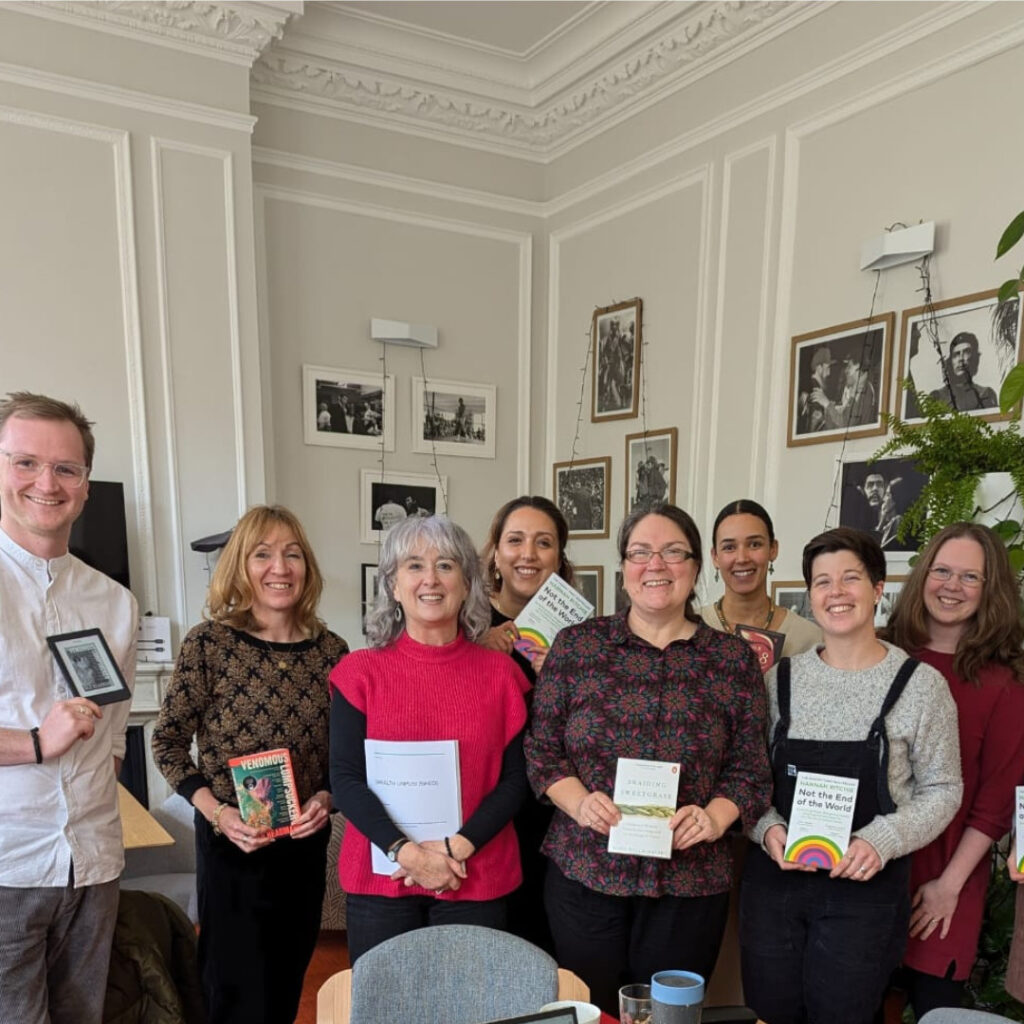
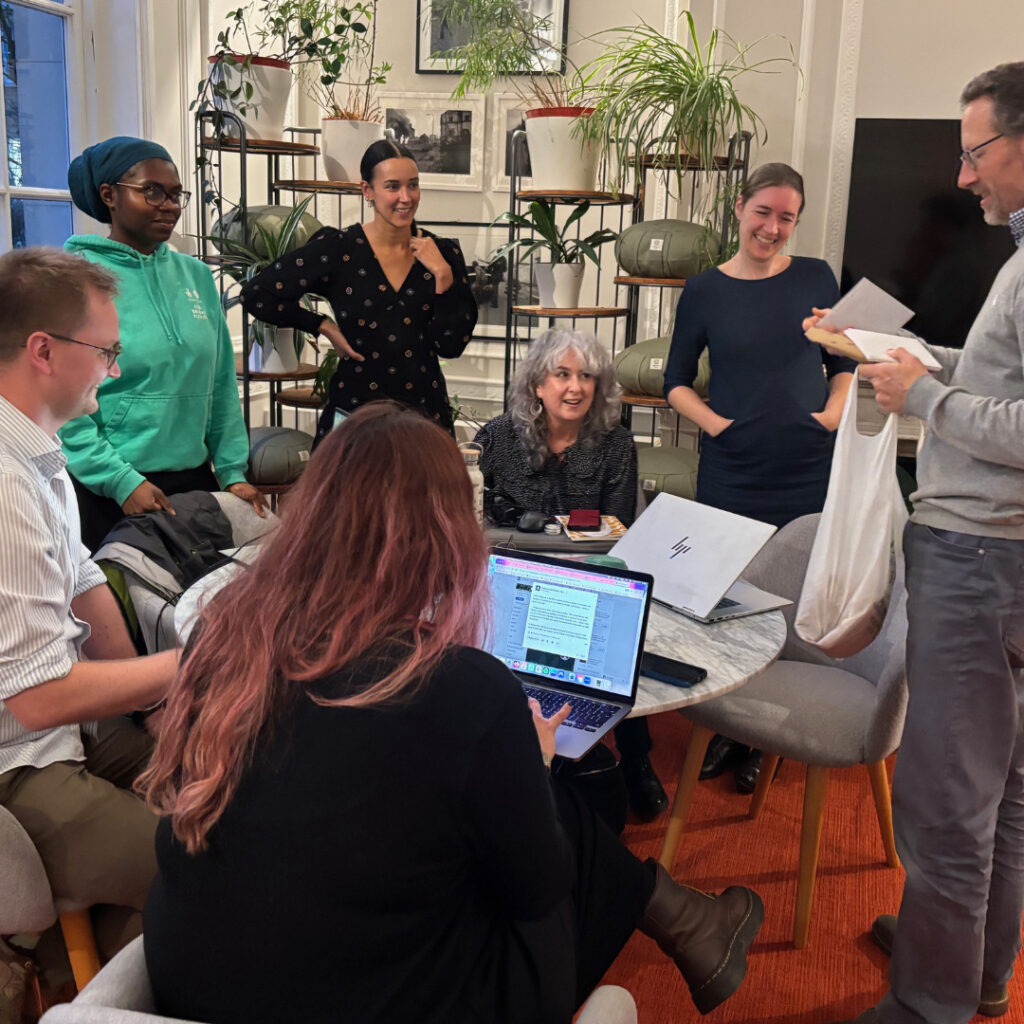
Below are a couple of EFN pictures reflecting how we work remotely but also aim to balance meeting up, working together and building a culture of support.
Supporting event participants
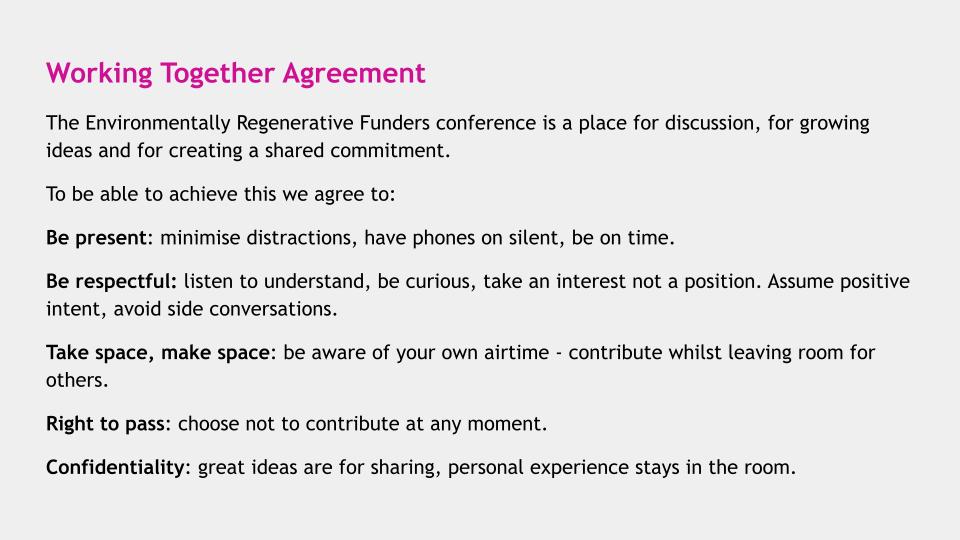
I have seen many examples of good accessibility practice at events in our sector recently. Some we already try to embed – such as ensuring there is a quiet space available, and, crucially, that everyone knows about it. We begin our GFF Nature Retreats by explicitly stating that we welcome everyone as they are, including every identity that people are bringing with them (and naming these); we would like to broaden this to our other events too. A recent NLCF event I attended had a great ‘working together agreement’ (see below) which we are also exploring adopting.
There are many other practices we would like to integrate, including communicating more clearly in advance of events about what to expect and accessibility arrangements. Where possible, we would like to make event spaces available thirty minutes before the start time, and invite participants to arrive early and settle in if that would help. Building breaks into schedules is vital for full- or multi-day events, as is making sure people feel able to take them without losing opportunities. All of these not only benefit neurodivergent people, but often help neurotypical people too.
There are also ways we can improve accessibility for neurodivergent people in our online events. A few examples include: sharing timetables in advance, allowing time for breaks, keeping visuals uncluttered, using accessible colour palettes and sans-serif fonts (Lexend and Verdana are often particularly recommended), enabling transcription (very helpful if you have ADHD which makes 100% concentration on conversation very difficult) and making camera use optional (again with ADHD it is very difficult to sit still for long periods of time!).
Recruiting inclusively
Neurodivergent people are among those disproportionately impacted by climate change, so it is vital that they are properly represented in the environment sector. Despite estimates suggesting 15-20% of people could be neurodivergent, we have found disclosure rates in recruitment processes to be very low.
A chronic lack of understanding, and historic stigmas, mean neurodivergence is often seen only as a disadvantage, but it can also bring great strengths. In my case, these include spotting patterns that others miss, hyper-focus, visual thinking, supporting colleagues empathetically and coming up with creative ideas and solutions. But is that what potential employers would assume if I wrote autism and ADHD on an application?
I would like EFN to be seen as the type of organisation where people feel able to lead with their differences, and trust they will be seen as strengths. We have a long-standing approach of asking creative questions in applications, rather than requiring standard cover letters, which help reduce bias and reveal how someone thinks, not just what they have achieved. We also try to incorporate JEDI-thinking throughout the review process and clearly state our commitments on recruitment documents. However, we know we can do more to ensure these efforts and words are genuine, and would welcome advice from others.
Raising awareness and convening
As a network with sizable audiences, one of the best things we can do is use our voice. We regularly share reports and articles relating to JEDI, including neurodivergence, and try to amplify voices with lived experience and expertise. Sharing our own journey is part of this too, and I hope this blog is a helpful contribution.
I believe neurodivergence (much of it undiagnosed) to be overrepresented in the environment sector. As a scientist, I like to base statements on evidence, but there hasn’t yet been enough research to prove this one. This view is instead based on my own experience in the sector and conversations with other neurodivergent people in the sector, and is also reflected in the work of author Joe Harkness. There are many possible reasons for this: the calm that nature can bring to overwhelmed minds, and the tendency of autistic people and/or those with ADHD to have a strong sense of justice, high empathy and a desire to fix things. However, there is little recognition or support for this group, despite the levels of burnout across the sector, something neurodivergent people are thought to be at greater risk of.
Bringing people together who may be able to understand and support each other can have powerful impacts. This is why I am currently exploring, with several others, the idea of setting up a network for neurodivergent people in the environment sector. If you would be interested in joining and/or supporting this, please do get in touch.
Next steps
This is very much a work in progress. We have taken some small steps and learnt a great deal, but know there is much more to do. We are very keen to hear from others with experience or ideas in this space, and to work collaboratively on what comes next. Our hope is to continue learning, testing and embedding more inclusive practices across EFN and we would welcome fellow travellers on this journey.
Blogs
Related blogs

Reflections from the World Conservation Congress
Our Chair of Trustees, Catherine Bryan, shares her personal reflections on the IUCN’s World Conservation Congress and key takeaways for funders.
Why more support for neurodivergent people working in climate is needed – and how funders and eNGOs can help
Neurodivergent climate justice activist, Emma de Saram, shares important insights from her neurodiversity and climate workshop and research, as well as key recommendations for funders and environmental organisations.

Mental health and the underfunded environmental determinants
It is widely documented that mental health is affected by a complex interplay of genetic, psychological, social / lifestyle factors, and environmental exposures. In recent years evidence of the environmental determinants of mental health has grown, yet these emerging concerns are often under the radar in the third sector.