
Imagine you’re in 2035 – what is the world like? This is how we opened the day for our Funder-Fundraiser online conference at the start of December 2025. Leading us in this imagination meditation was Phoebe Tickell, Founder & CEO of Moral Imaginations, who also led our keynote for the day. She encouraged us to think about our shared future vision as a sector and how we can act as humans first and roles second to work more effectively and honestly together.
With this spirit we delved into a day where we asked big questions about funder and fundraiser relationships. After all, bringing together over 200 funders and fundraisers via Zoom was a daunting task, but one we felt needed to happen. We constantly get feedback from our funder and fundraiser networks that the funding ecosystem defaults to extractive, competitive and untransparent practices. Our hope is conversation and coming together will help shift the funding ecosystem and challenge these defaults. Below are some of the key takeaways from each of the main sessions and learnings.
Pulling in the same direction – session one
What would happen if funders and fundraisers were consistently pulling in the same direction? Our hunch was that bringing funders and fundraisers closer together and helping them realise a joint vision could be transformative. The panel delved into questions like this, asking what would good look like in funder and fundraiser relationships?
Honesty on both sides of the equation came out loud and clear as the first step to ensure that relationships are built successfully. Funders shared that they wanted fundraisers to be clear and not shy about what monetary support is needed. Fundraisers felt funders being super clear on their priorities and strategy for giving can save much time. Overall the panel agreed multiple times that understanding each other’s needs is really paramount and encourages transparency from the off. Ultimately ‘people give to people’ and therefore building relationships where you can share your thoughts and feedback freely is better for everyone – especially as everyone has targets to hit and are super busy.
Our thanks go to our chair Jane Cabutti, EFN and our speakers, Hannah Wood, Bees for Development, Jenny Dadd, Esmée Fairbairn, Christine Oliver, Polden-Puckham Charitable Foundation and Louise Krzan, Greenpeace.
Funder challenges – session two
In 2024, we published research on the challenges that fundraisers face, Increasing the effectiveness of environmental funder-fundraiser relationships, and we were pleased to begin part two of this research focusing on the challenges that funders face in 2025. During this panel, we began to share some of these challenges and insights from the research thus far (more to come in 2026).
The panel included three funders that very openly shared the challenges funders face when setting up, running and growing grant programmes. Unsurprisingly all grantmakers have different flexibility on changing bureaucratic red tape and decision making processes; from persuading trustees to governance changes, it can be slow and difficult to shift practices.
Other challenges included creating the conditions for collaboration – whether that’s with grantees or other funders – and building trust for change – again whether that’s with grantees or trustees etc. One particular challenge that stood out for funders who have grown their grant programme is the risk of losing the human touch and acting as a positive disruptor. Overall it’s refreshing to hear about the efforts funders are making to change their practices – even if there is much more to do.
Our thanks go to our chair Sarah Bradly and our speakers, Sarah Brown, Scottish Marine Environmental Enhancement Fund, Aruna Bahia, Co-Op Foundation and Emily Keir-Muir, Savitri Trust.
Stepping up: in conversation with Masego Madzwamuse – session three
In another edition of our ‘Stepping Up’ series, we welcomed Masego Madzamuse from Oak Foundation in conversation with Elizabeth Salter Green. We asked Masego to help us explore the operating context of the environmental sector and how it has changed over the last year. What does it look like for funders and fundraisers to ‘step up’ at this moment in time?
Masego explained how funders need to be thinking about collaboration on a larger scale to move funds at speed and help movements to build. For example in one of their newer programmes on marine work, Turning Tides, they saw that the problems they wanted to tackle were really big and doing small, scattered grant making was not going to shift the dial in the way they wanted. They purposefully reached out to many large funders, bringing grantholders and local community leaders to explain the issues to them, which helped to bring more funders and decision makers on board.
Masego explained that she hoped funders would actively take an intersectional and inter-sectoral approach and as such collaboration allows us all to act more strategically and bring justice and equity to the foreground. As she put it:
“The bulk of the work is getting the health funders, the wildlife funders, the marine funders to see where their goals overlap. People don’t live single issue lives. It’s really easy to do when you put the person first.”
Our thanks go to chair Elizabeth Salter Green, Chemtrust and our speaker Masego Madzwamuse, Oak Foundation.
Go further: rediscovering intuition in strategy and leadership – session four
We welcomed River Action’s Lauren Abdel-Razek and Katy Shorten to share how they rediscovered their intuition to transform their fundraising strategy. Using meditation techniques gave River Action’s team a chance to quieten the mind and tap into another way of thinking, their intuition, to take a fresh look at their fundraising approach. The session gave the audience a chance to do some short meditations too and get a taste of what it’s like to tap into their intuition in a work context.
Lauren and Katy shared that staff felt more connected and invested in the final fundraising strategy. The strategy prioritised authentic messaging and emphasises people and connections – and it has so far delivered very encouraging results. Our thanks go to Lauren and Katy for sharing their process.
Roundtables
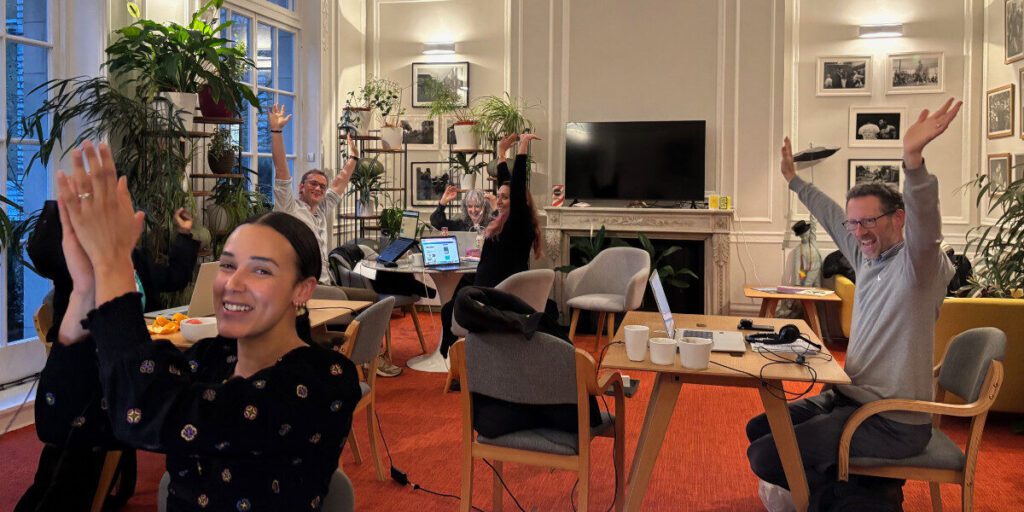
We ran many roundtables to give attendees a chance to have more in-depeth discussions, covering specific topics like unexpected learnings between funders and fundraisers, funding on an ecosystem level, neurodiversity and environmental action, funding for collaboration, navigating change, gender justice climate action, imagining the future, power dynamics and systemic approaches.
It’s difficult to summarise the brilliant conversations that happened within these roundtables but we all felt very energised to see funders and fundraisers come together to talk so openly on these big issues. We’d like to thank our amazing roundtable hosts: Hugh Mehta, Nick Smith, Jamie Agombar, Emma De Saram, Bonnie Hewson, Sally Vivyan, Tessa Durham Yasmin Ahammad, Phoebe Tickell, Nick Gardner, Laura Perratt & Sam Read.
Key takeaways and next steps
In our concluding remarks, our colleague Jane, noted that events like this show how fundraisers and funders are not two separate groups but part of a wider ecosystem working towards a positive future – a future that we feel really energised by and believe we can realise.
Some key lessons were mentioned repeatedly throughout the day that we can takeaway right now:
- More collaboration is needed across funders, fundraisers, charities, those with lived experience and other sectors.
- Intersectionality came up as a theme at every level whether that’s across different sectors within the environmental sector and other social sectors.
- Building relationships based on honesty, clarity, transparency and trust is key for everyone in the fund ecosystem.
- There is a great need for funders to fund more flexibly, longer term and take risks.
In 2026, we will continue the conversation through our research on funder challenges, events that continue to bring funders and fundraisers together and sharing resources on what effective funding and fundraising looks like. Let’s shift the funding ecosystem to better serve all of us and supercharge our efforts to protect our planet and people!
A big thank you goes to Oscar Brennecke-Dunn and Natasha Ratter for leading in organising the conference and thank you to the wider team for their support during the day.