
Growing up in Mumbai, with summers spent in my native villages of Malvan and Nagpur, climate impacts were never abstract. Urban flooding that shut down the city, extreme heat that made it hard to function, water shortages that shaped daily routines, these were part of life. They stay with you, especially when you know your country is not among the biggest contributors to the crisis. That imbalance, living with consequences without causing them, pushed me to rethink my path.
Before moving into climate work, my background was in business and digital transformation. In India, I ran a small startup called Finden Go Digital, supporting mom-and-pop shops, solopreneurs, and small and medium-sized businesses as part of the Make India Digital initiative. It was practical work rooted in everyday challenges, and it taught me how much change depends on people who rarely get attention in big policy conversations.
I came to the UK to study a Double Degree Master of Science in International Project Management, after spending my first term in Milan. But once I arrived, I realised how difficult it is for international practitioners to enter climate and nature-related work. Visa systems tend to favour predictable routes like IT, engineering, and corporate roles, paths seen as “safe” for settlement. I don’t dismiss those choices, but stepping into sustainability, nature restoration, or community-based climate work is far more challenging. The language, frameworks, and expectations are shaped by Western systems. For many of us, it means starting from scratch.
That’s why programmes like I.G. and EFN’s Leadership Lab matter. They give people who don’t come from traditional environmental backgrounds the tools, confidence, and space to build a meaningful path. And because the programme is fully funded, it’s genuinely accessible, something important in my case, having already invested more than £20,000 in my studies abroad.
“That’s why programmes like the Leadership Lab matter. They give people who don’t come from traditional environmental backgrounds the tools, confidence, and space to build a meaningful path.”
Before joining the cohort, I was volunteering with the 2050 Climate Group’s Leaders Network and with the Ethnic Minority Environmental Network as a Climate Ambassador. Both spaces gave me agency and a sense of belonging. What stood out most was how different the learning culture was compared to India. There, we often expect lecturers, entrepreneurs, or consultants to lead sessions. In Scotland, community gardens, activists, charities, and local changemakers were the teachers. It made sense: when it comes to climate and nature, communities are the best teachers. Many of these groups were funded through public or organisational routes, which allowed them to continue their work and share their knowledge.
The Leadership Lab also offered something I hadn’t experienced before in business schools, space to reflect on burnout, personal challenges, and the emotional side of climate work. We met organisations and decision-makers who have real influence over biodiversity and nature policy. We shared what was working, what wasn’t, and what we were struggling with. Those conversations were honest and practical, and they helped me understand how much the sector relies on relationships, trust, and long-term support.
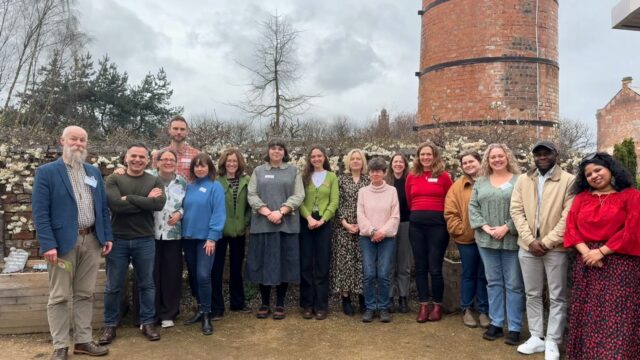
One of the most meaningful moments during the Leadership Lab came during the first of two in-person meet-ups for leaders from all three cohorts. I met Lucy Neville from Museums Galleries Scotland, and what struck me was how easy it was to simply walk up to her and start a conversation. No closed doors, no layers of introductions, no hesitation. The Leadership Lab created a space where people who genuinely care about climate and nature could meet as equals, regardless of background or job title. That single conversation opened a path I never expected. I’m now part of the honorary advisory group working with Museums Galleries Scotland, helping shape their climate and nature planning course for museums. The work is focused on making these spaces more inclusive and diverse, and on gently challenging and decolonising the language and assumptions that often shape climate conversations.
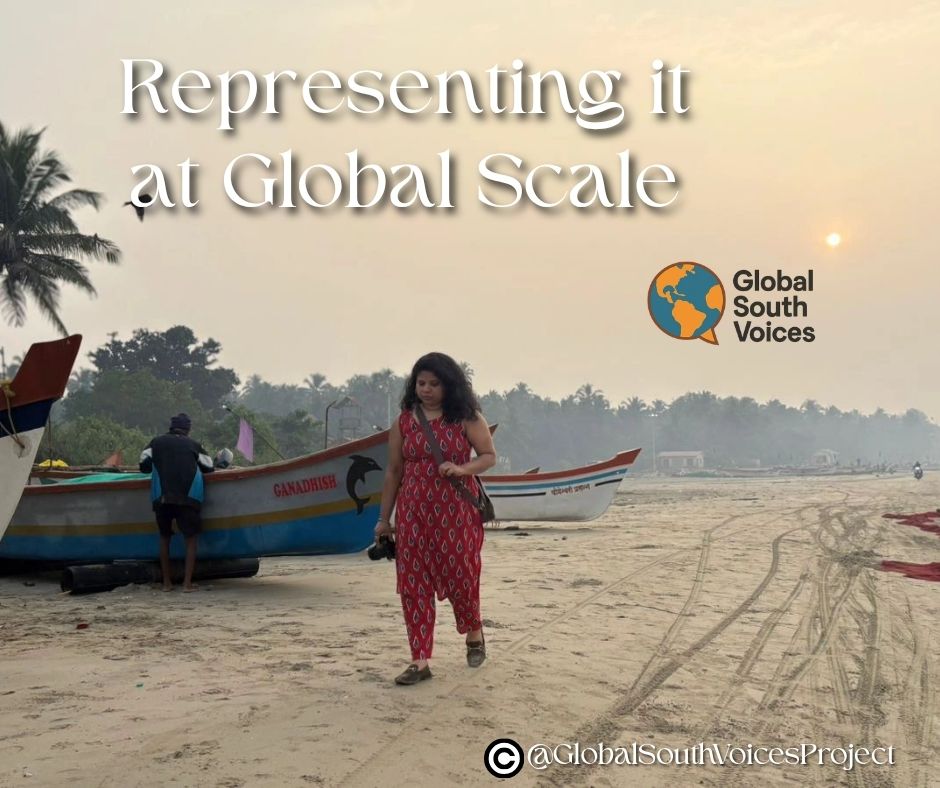
This learning became the foundation for the Global South Voices Project, which I initiated in November 2025. I’ve been building it slowly, without rushing into formal structures, because I want the vision to be shaped with intention. The project comes from lived experience like mine, and those of coastal communities such as my maternal village’s fishing community in Malvan, Maharashtra. Their knowledge is rich, practical, and rooted in generations of observing the sea, the land, and the changes happening around them. Yet this kind of knowledge rarely finds a place in mainstream environmental funding or decision-making.
My journey has shown me that funders have a powerful role in shaping who gets to participate in climate work. Flexible, trust-based funding can make it possible for underrepresented practitioners to contribute meaningfully. Support for unsalaried or freelance individuals like me can open doors for people who otherwise cannot afford to give their time. Funding community-rooted spaces creates agency and leadership that no top-down model can replicate. And recognising lived experience as expertise, not an add-on, can help rebalance whose knowledge is valued. My vision is to create a capacity-building program for my maternal village in Malvan, where the youth then takes on this ancestral knowledge, and we can have an exchange on circular and experiential living lab cohorts for Global North scholars, professionals, environmental funders and so on.
There is so much potential in bringing Global South perspectives into the UK’s environmental spaces. Not as case studies, not as charity, but as equal contributors with insights that can strengthen the sector. I hope that funders continue to explore how their choices can make the movement more inclusive, more grounded, and more effective, especially for those who have been living with climate impacts long before they became headlines.
EFN’s reflection on the Leadership Lab
We’ve been running the Leadership Lab over the last year in partnership with the superb team at I.G. Advisors. This pilot was made possible thanks to The National Lottery Heritage Fund and National Lottery players. Our key goals were to equip 60+ senior leaders working in the climate, environment and natural heritage space across Scotland with confidence, practical skills and increased connections for long-term impact. Across all three cohorts, external evaluation* found substantial success in improving leadership confidence, self-care, and professional solidarity. Leaders immediately reported feeling more motivated and better equipped to drive impact and in the long term leaders reported feeling more connected and part of a mutually supportive environmental sector.
Throughout the past year, we heard loud and clear the critical need for this to continue in the environment space, and I would love to hear from any of EFN’s funder members or other funders who might be interested in supporting an expanded programme for senior leaders in Scotland and elsewhere. You can get in touch with Julie to find out more.
*we’ve pulled together this visual summary of our evaluation results, and can share the detailed findings, too, if you’d like to see those.