
At COP16, the world’s largest biodiversity summit, Indigenous Peoples and local communities were formally recognised as key stewards of biodiversity. It was an important acknowledgement of what communities have demonstrated for generations: forests and ecosystems are best protected by those who live in them.
The evidence shows that community-led conservation works. And local leadership should be at the centre of environmental action. But this awareness has not unlocked direct and adequate funding for organisations led by Indigenous People and local communities (IPLCs).
We know from Mbou Mon Tour’s and Ashden’s experience that many funders want to evolve their support, but face barriers in doing so. Not least the limited visibility of IPLC-led organisations. A closer look at these experiences reveals important lessons for funders who want to address these barriers.
Introducing Mbou-Mon-Tour and what effective conservation looks like for local communities
I, Peter, work together with Jean-Christophe Bokika who helped found Mbou-Mon-Tour in the Democratic Republic of Congo nearly thirty years ago. We work in the Congo Basin, home to the world’s second-largest tropical rainforest. Beneath its vast canopy live bonobos, one of humanity’s closest living relatives and a species found nowhere else on Earth. Listed as Endangered on the IUCN Red List, bonobos move through the forest with a freedom that seems almost effortless. However, protecting them is anything but that.
Economic pressures have contributed to deforestation, driving people to charcoal production and slash-and-burn agriculture. As forests shrank, so did the habitat available to bonobos and other wildlife. But local families still needed to earn an income and pay for healthcare and education. Conservation could not succeed unless those realities became part of the solution.
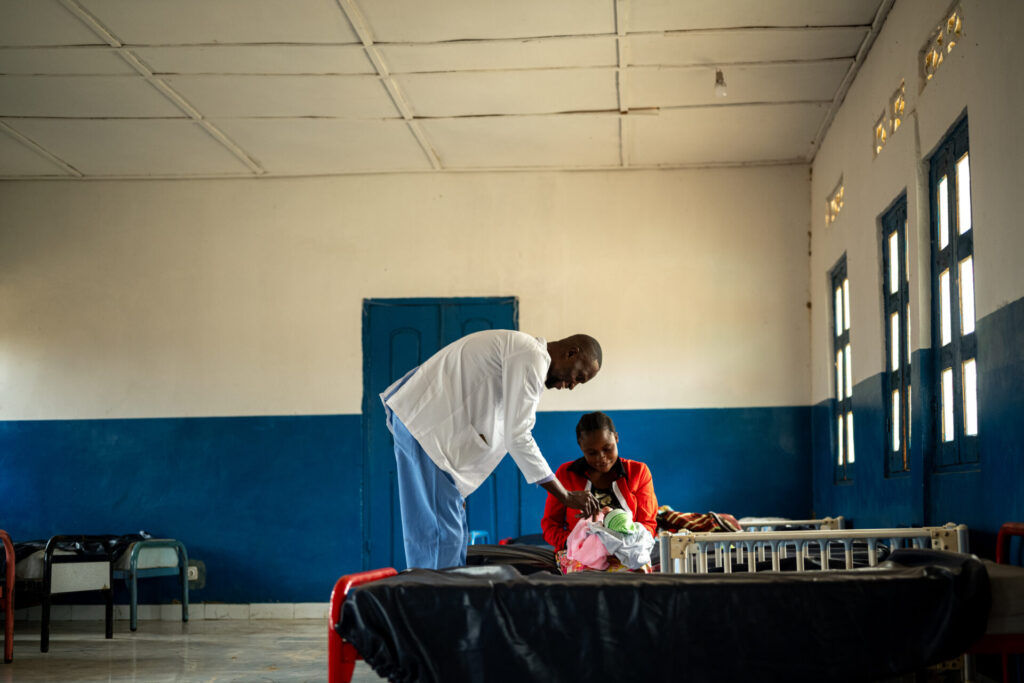
Mbou-Mon-Tour was created in response to this. The organisation has now worked with six villages to secure community forestry concessions covering nearly 50,000 hectares of forest.
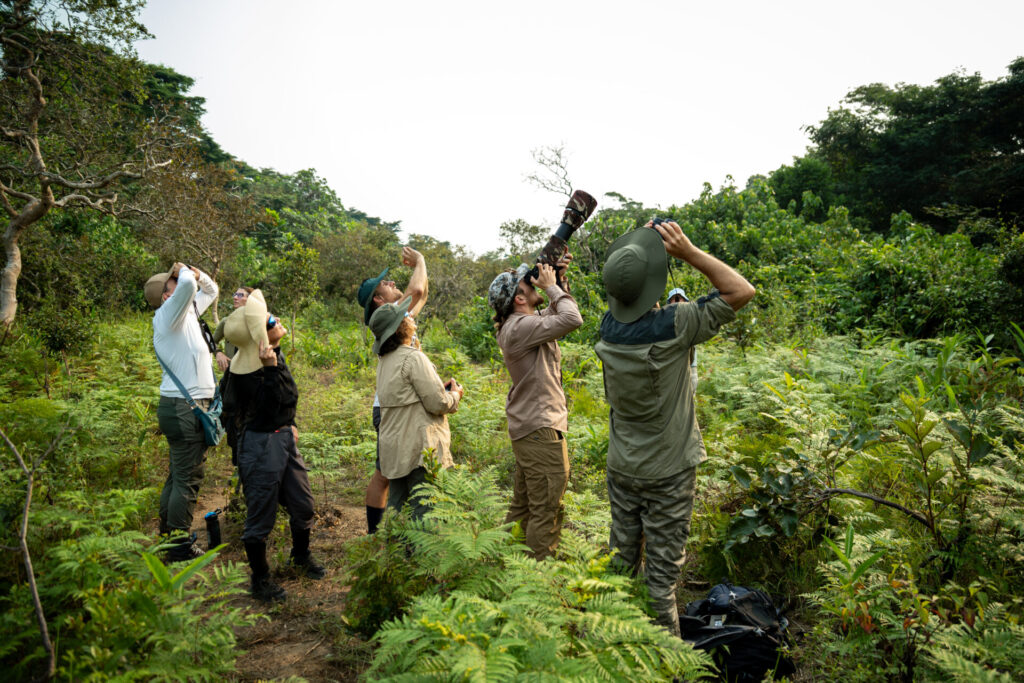
Communities have also been supported to shift farming towards savannah areas, develop agroforestry activities, and create income through scientific research and ecotourism centred on bonobos. Today, this work directly benefits around 10,000 people and another 40,000 indirectly.
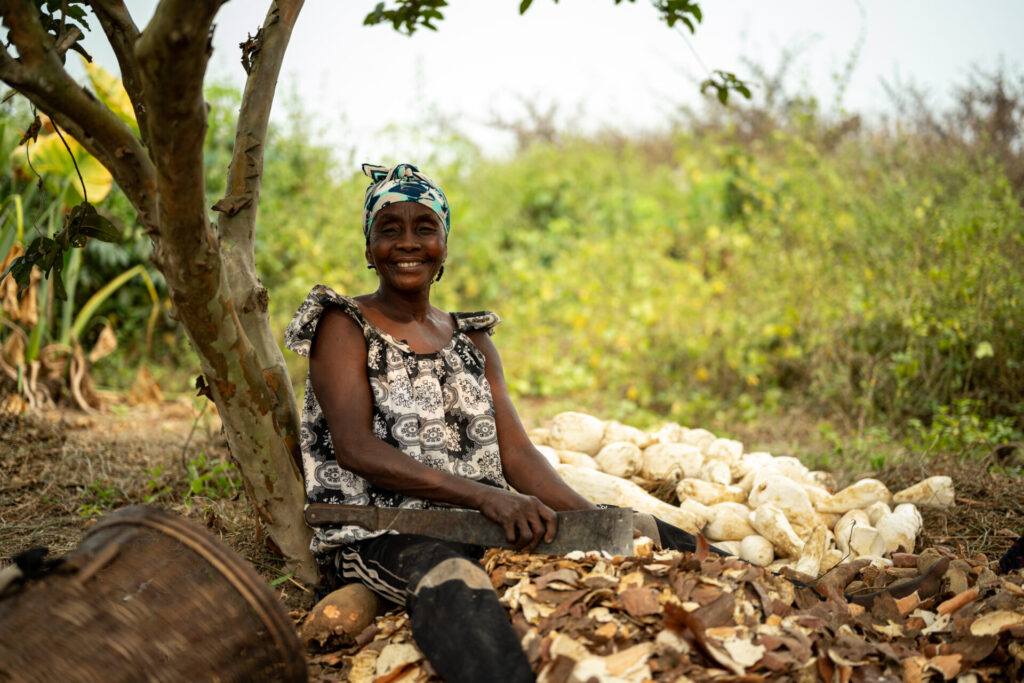
For local resident Christine Badiwé, 49, these changes can be measured in more personal ways. Before, her family farmed in the forest. Through support from Mbou-Mon-Tour, they were encouraged to move their farming activities to the savannah and were provided with training in sustainable farming techniques. Today, she grows cassava on savannah land, helping to reduce pressure on forest, while improving her harvests. The crop feeds her family, and surplus produce is sold to generate income
Stories like Christine’s explain why supporting the livelihoods of communities is not a secondary benefit of conservation. It is one of the reasons conservation succeeds in the first place.
Yet, the systems that fund conservation have remained slow to change. In our experience, the challenge is often access.
Challenges facing IPLC-led organisations
Funding opportunities can be difficult to navigate. Application processes and reporting requirements are frequently designed with larger organisations in mind. These procedures are not adapted to the realities and contexts on the ground. Grants are often short-term. Much of the funding intended for local communities continues to flow through layers of intermediaries before reaching the organisations doing the work on the ground. Despite growing commitments to locally led action, less than 1% of international climate finance intended to support Indigenous Peoples and local communities reaches them directly.
At Mbou Mon Tour, we experience these challenges every day. Building trust with communities, strengthening community forest governance, supporting more sustainable livelihoods, and finding a fair balance between people’s needs and the protection of biodiversity is long-term work. Creating this kind of peaceful coexistence between communities and nature cannot be achieved in a few months. It requires patience, sustained engagement, and resources. Yet funding is often provided in short cycles of six months to a year, making it difficult to support the lasting change that healthy forests and thriving communities depend on. This makes long-term planning difficult and creates uncertainty for both communities and organisations.
One recent experience sums up the challenges we face. Mbou-Mon-Tour is a partner in Thriving Forests, an Ashden programme supporting IPLC-led organisations across Africa, Latin America and Southeast Asia. Earlier this year, I, Peter, was invited to London to speak at an Ashden event on community-led conservation and conservation finance, but my visa application was denied. This experience reflects a wider issue: many of us still face structural barriers to accessing the spaces where conservation priorities and funding decisions are set.
So why do these barriers persist? Across experience at Mbou Mon Tour and Ashden’s work with 15 community-rooted organisations through Thriving Forests, three challenges consistently emerge. While they may appear different on the surface, they often stem from the same underlying issue: a lack of trust in organisations led by local communities and Indigenous Peoples.
First, conservation has often been designed from the outside in. Priorities, programmes and measures of success are frequently shaped far from the communities they are intended to support. While local organisations are increasingly consulted, they are not always involved in defining the solutions from the start. As a result, many monitoring frameworks focus primarily on biodiversity outcomes, without fully capturing the social, economic, and institutional changes that communities are working towards.
Second, visibility shapes access. Mbou Mon Tour’s fellow partners in Thriving Forests are remarkable organisations protecting forests, restoring ecosystems and supporting livelihoods, yet many remain largely unknown by funders. These community organisations play a key role in collecting field data and ecological knowledge, but their contributions are often not properly recognised or credited in scientific publications. Even when they are involved in research, they may remain invisible in final outputs, which limits their recognition as genuine producers of knowledge. Meanwhile, larger organisations are more visible as they have stronger communications capacity and networks.
Third, systems often reward administrative capacity over local knowledge. Funding, monitoring and accountability mechanisms are frequently built around rigid reporting structures that do not always reflect local realities. It can seem that the ability to navigate complex grant forms – often in a language that’s not their own – matters more than decades of experience protecting a landscape.
But none of these challenges are insurmountable.
How funders can help overcome these challenges
Partnerships need to be built based on trust and start recognising local organisations as leaders, not simply delivery partners. That means involving communities in shaping programmes from the outset, recognising different forms of knowledge and expertise, and designing funding around the realities of conservation work rather than administrative convenience.
A key part of this is providing more direct, flexible and long-term funding. Local realities change, and organisations need the freedom to adapt their work accordingly. Flexibility allows communities to respond to emerging needs and opportunities while staying focused on long-term conservation goals.
It also means investing in more than just technical programmes. Visibility, storytelling and relationship-building are often treated as secondary to conservation outcomes. Yet they are often what enable locally rooted organisations to access funding, influence decisions and sustain their work overtime. Thriving Forests has shown how communications support and access to networks can help organisations become more visible.
Let’s rethink how trust and accountability are built too. Strong monitoring, learning and accountability systems matter. But they are most effective when developed with local organisations rather than imposed upon them. Communities are often the first to see changes in forests, livelihoods and biodiversity, and are best placed to track them over time.
The evidence is already there. Community-led conservation works. But now the question is: are our funding systems willing to trust it?
Learn more about Mbou-Mon-Tour
Learn more about Thriving Forests
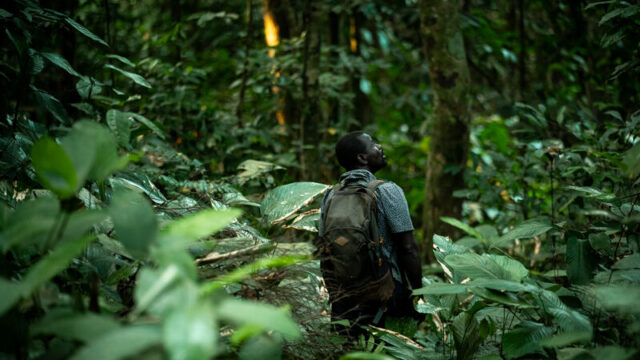
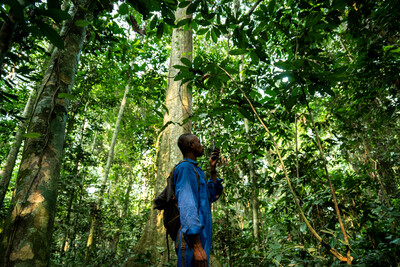
Lead image: a portrait of Babi Longomba, 51, a tracker of the NGO Mbou-MonTour, patrolling the Nkala observation site, Mai-Ndombe, Democratic Republic of Congo Photo credits: Herman Kambala/Ashden